 Save
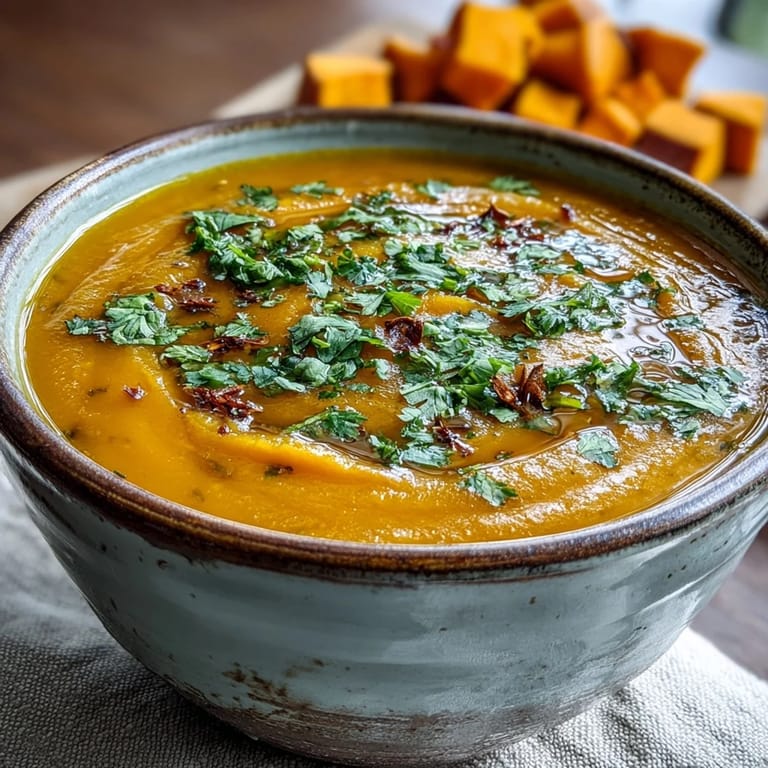
Save I discovered this soup on a gray October afternoon when my farmer's market haul included an enormous butternut squash I wasn't sure what to do with. A friend mentioned she'd been obsessed with red lentil soups, and something clicked—the idea of those two coming together felt right. That first batch filled my kitchen with such a warm, spiced aroma that my roommate actually paused whatever she was doing to ask what smelled so good. It became the kind of dish I make when I need comfort but also want to feel genuinely nourished.
I made this for my partner during one of those seasons when we were both running on empty—work stress, weather shifts, that general fatigue that settles in when you forget to slow down. They came home to bowls of this burnished orange soup, and I watched them take the first spoonful with that expression of someone rediscovering what warmth actually tastes like. We sat there for twenty minutes without talking much, just eating and letting the spices do their gentle work.
Ingredients
- Butternut squash: The star that brings natural sweetness and that velvety texture when roasted—I learned to cut it carefully by microwaving it for two minutes first, which makes it so much easier to peel and way safer.
- Red lentils: These dissolve into the broth faster than other varieties, creating creaminess without any cream, and they're packed with protein in a way that actually keeps you satisfied.
- Carrots and onion: The aromatic base that builds flavor gradually—don't rush this step, as those five minutes of sautéing make a real difference in depth.
- Garlic: Just enough to whisper through the soup rather than shout, preventing that raw edge that can happen with too much.
- Ground cumin, coriander, turmeric, cinnamon, and smoked paprika: This combination was the revelation for me—it's warm without being heavy, and the cinnamon rounds out the earthiness in a way that feels almost luxurious.
- Vegetable broth and water: The ratio matters because broth alone can sometimes make the soup feel one-dimensional; the water lets the other flavors shine.
- Olive oil: Two tablespoons total split between roasting and sautéing keeps things light while building layers of flavor.
- Lemon juice: The final touch that brightens everything and prevents the soup from tasting flat or heavy.
Tired of Takeout? 🥡
Get 10 meals you can make faster than delivery arrives. Seriously.
One email. No spam. Unsubscribe anytime.
Instructions
- Set your oven and prepare the squash:
- Get your oven heating to 400°F and line a baking sheet while you work. This prep step only takes a moment but sets everything up so you're not scrambling later.
- Roast the squash until golden:
- Toss those cubes with oil, salt, and pepper, then spread them out in a single layer—don't crowd them, as you want them to caramelize rather than steam. After 25 to 30 minutes, they should smell incredible and have golden edges that taste almost nutty.
- Build your flavor base:
- While the squash roasts, warm olive oil in your pot and add the onion and carrots, listening for that gentle sizzle as they hit the heat. After five minutes they'll soften and become fragrant, which is your signal to add the garlic for just one more minute.
- Bloom your spices:
- Add all those spices at once and stir constantly for about 30 seconds—this is the magic moment where they go from dusty powder to something alive and aromatic. You'll know it's working when your kitchen smells like a warm embrace.
- Combine and simmer:
- Add the roasted squash, rinsed lentils, broth, and water, then bring everything to a boil before dropping the heat low. Simmer uncovered for about 20 minutes, stirring occasionally, until the lentils have completely softened and lost their shape.
- Blend until velvety:
- Remove from heat and use an immersion blender to puree the soup to your preferred consistency—I like it completely smooth, but some people enjoy a little texture. If using a regular blender, work in careful batches and let the steam escape between batches.
- Finish with brightness:
- Stir in lemon juice and taste as you go, adjusting salt and pepper until it feels balanced. This is your moment to make it personal—add more spice if you want heat, more lemon if you need brightness.
- Serve with intention:
- Ladle into bowls and garnish with fresh cilantro or parsley if you have it, though the soup is beautiful on its own.
 Save
Save There's something about ladling a bowl of soup that feels like a small act of care, even when you're making it just for yourself. This one reminds me that nourishment doesn't have to be complicated or fancy—it just needs to taste good and make you feel a little bit better.
The Secret to Silky Texture
The texture of this soup lives in the blending, and I learned this through a failed experiment where I didn't blend quite enough. Red lentils naturally break down and release their starches, which creates creaminess without any cream, but you have to give them that 20 minutes to fully soften first. Some people add a splash of coconut milk at the end for extra richness, which is lovely if you want that, but honestly the soup gets silky enough just from the lentils themselves.
Timing and Flexibility
I've made this soup in 45 minutes on a busy weeknight and also spent an afternoon on it when I had nowhere to be—both versions turned out beautifully. The actual hands-on time is short; most of the cooking happens while you read or tidy or just sit with a cup of tea. If you want to add ginger as suggested in the notes, mince it fresh and add it with the garlic for maximum zing, or stir it in at the end if you prefer a gentler ginger note.
Variations and Personal Touches
This soup is forgiving in the best ways—you can swap yellow lentils for red if that's what you have, use different root vegetables if butternut squash isn't available, or adjust the spices based on what calls to you. I've added a teaspoon of smoked paprika one day and wished I'd done it sooner; another time I threw in a handful of spinach at the very end for color and extra greens. The base is solid enough to handle your creativity.
- Coconut milk stirred in before blending transforms it into something richer and more indulgent.
- Fresh ginger adds a subtle heat and complexity that some people find transformative.
- A sprinkle of crispy chickpeas or toasted seeds on top adds texture and makes it feel special enough for company.
 Save
Save This soup has become the dish I reach for when I need to remember that taking time to cook something real is always worth it. Make it, taste it, adjust it—it's yours to make your own.
Recipe Q&A
- → Can I make this soup ahead of time?
Absolutely. This soup actually tastes better the next day as flavors meld. Store in an airtight container for up to 5 days and reheat gently on the stovetop.
- → Is this soup freezer-friendly?
Yes, it freezes beautifully. Cool completely, then transfer to freezer-safe containers leaving some headspace. Thaw overnight and reheat, adding a splash of water if needed.
- → Can I skip the roasting step?
You can sauté the squash with onions instead, but roasting concentrates natural sugars and adds caramelized notes that elevate the final depth of flavor significantly.
- → What can I serve with this soup?
Crusty gluten-free bread, naan, or crackers make perfect accompaniments. A dollop of yogurt or coconut milk adds richness, while extra fresh herbs bring brightness.
- → How do I adjust the consistency?
For a thinner soup, add more broth or water during simmering. To make it thicker, reduce the liquid initially or blend less thoroughly for some texture variation.
- → Can I use other lentils?
Yellow lentils work similarly to red. Brown or green lentils hold their shape better and won't create as smooth a puree, but still make a delicious chunkier version.