 Save
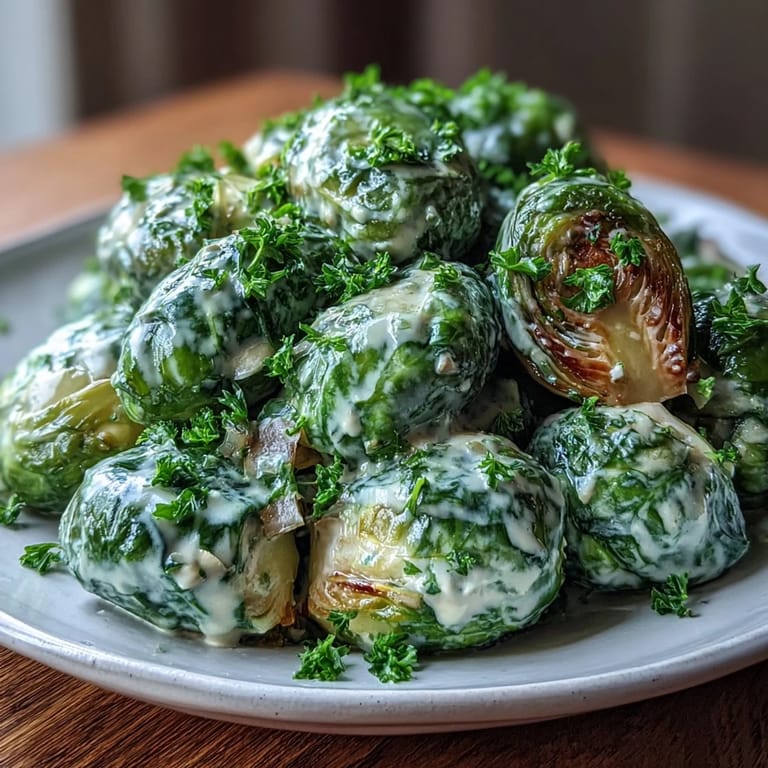
Save My neighbor handed me a basket of Brussels sprouts one chilly November morning, more than I knew what to do with. I stood in my kitchen staring at them, remembering how I used to push them around my plate as a kid. Then I spotted the cream cheese in my fridge and thought, why not try something rich and silky instead of the usual roasted version? That experiment turned into this recipe, and now it's the dish I make whenever I need to win over Brussels sprouts skeptics.
I first served this at a small dinner party where half my guests claimed they hated Brussels sprouts. The room went quiet after the first bites, and then someone asked for the recipe before dessert even arrived. Watching people go back for seconds, scraping their plates clean, reminded me that sometimes the right sauce can rewrite your entire relationship with a vegetable. That night, this dish earned a permanent spot in my rotation.
Ingredients
- Brussels sprouts (600 g, cleaned and trimmed): Look for firm, bright green sprouts without yellowing leaves, and trim the stems just enough to remove the dry end without losing too many outer leaves.
- Onion (1 small, finely chopped): The sweetness from slow cooking the onion builds the flavor foundation for the sauce, so don't rush this step.
- Garlic (1 clove, minced): Fresh garlic adds a warm, aromatic depth that powdered just can't match, and one clove is enough without overpowering the delicate mustard cream.
- Fresh chopped parsley (for garnish): A handful of bright green parsley at the end adds color and a fresh, herbal note that cuts through the richness.
- Cream cheese (150 g): This is what makes the sauce luxuriously thick and velvety, melting into the broth to create that silky texture.
- Dijon mustard (2 tablespoons): The tangy, slightly sharp mustard balances the richness of the cream cheese and gives the sauce its signature character.
- Vegetable broth (150 ml): Use a good quality broth because it thins the sauce to the perfect consistency and adds savory background flavor.
- Butter (2 tablespoons): Starting with butter instead of oil gives the sauce a richer, more rounded flavor from the very first step.
- Lemon juice (1 teaspoon): Just a small squeeze brightens everything and keeps the dish from feeling too heavy.
- Salt and pepper (to taste): Season carefully, tasting as you go, because the broth and mustard already bring some saltiness to the mix.
Tired of Takeout? 🥡
Get 10 meals you can make faster than delivery arrives. Seriously.
One email. No spam. Unsubscribe anytime.
Instructions
- Blanch the Brussels Sprouts:
- Bring a large pot of salted water to a rolling boil, then add the cleaned Brussels sprouts and cook for 5 to 7 minutes until just tender but still firm with a slight bite. Drain them immediately in a colander and set aside so they don't overcook and turn mushy.
- Sauté the Aromatics:
- Melt the butter in a large skillet over medium heat, then add the chopped onion and sauté for 3 to 4 minutes, stirring occasionally, until it turns soft and translucent. Toss in the minced garlic and cook for just 1 minute until the kitchen smells incredible and the garlic is fragrant.
- Build the Creamy Sauce:
- Lower the heat and add the cream cheese and Dijon mustard to the skillet, stirring and mashing with your spoon until the mixture is smooth and well combined. Slowly pour in the vegetable broth, stirring continuously, until the sauce becomes creamy, glossy, and perfectly homogeneous.
- Season and Finish:
- Taste the sauce and season it with salt, pepper, and lemon juice, adjusting to your preference. Add the cooked Brussels sprouts to the skillet, gently tossing them in the sauce until every sprout is coated and warmed through, about 2 to 3 minutes.
- Serve:
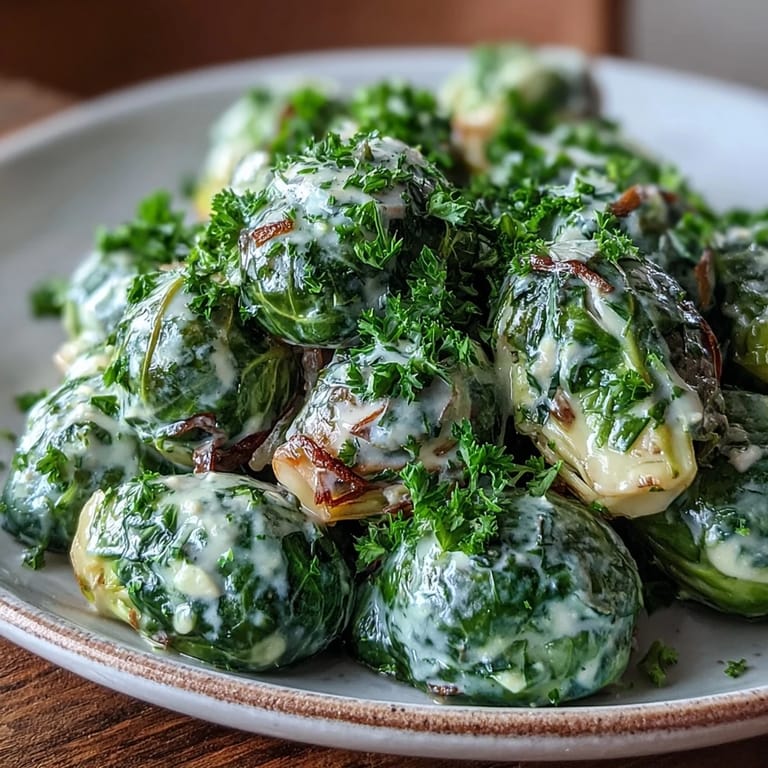
- Transfer everything to a warm serving dish and scatter fresh chopped parsley over the top for a pop of color and freshness. Serve immediately while the sauce is still silky and the sprouts are hot.
 Save
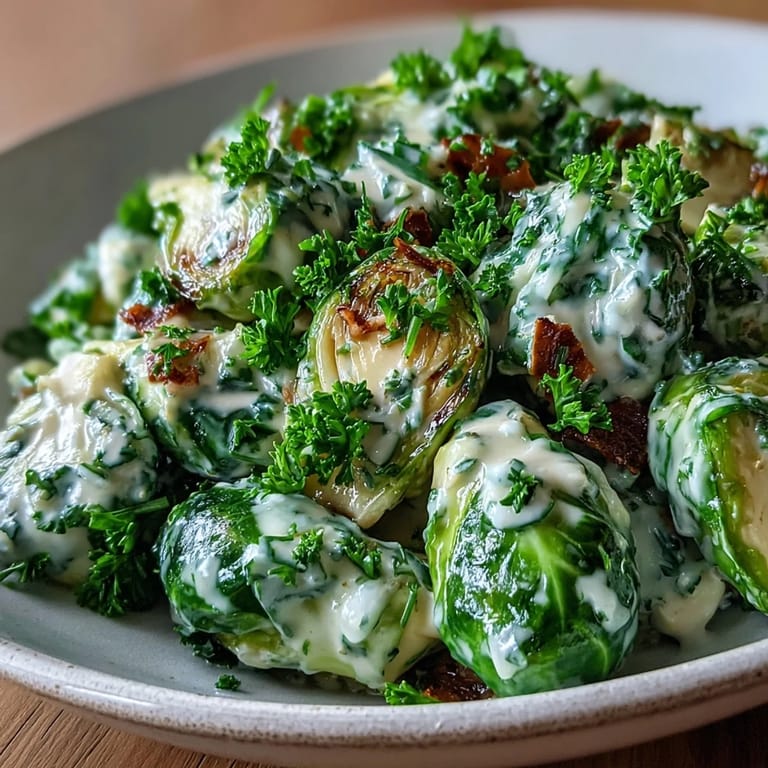
Save One evening, I made this for my mom, who had always boiled Brussels sprouts into oblivion when I was growing up. She took one bite, paused, and said she didn't realize they could taste like this. We sat at the table long after the plates were empty, talking about how ingredients we thought we knew could surprise us with just a little creativity and care.
Serving Suggestions
This dish shines alongside roasted chicken, pan seared pork chops, or a simple grilled steak, where the creamy sauce complements the savory richness of the meat. I've also served it over warm crusty bread as a vegetarian main, letting the sauce soak in and turn it into something deeply comforting. For a lighter pairing, try it with a crisp green salad dressed in lemon vinaigrette to balance the richness.
Storage and Reheating
Leftovers keep beautifully in an airtight container in the fridge for up to three days, and the flavors actually deepen overnight as everything melds together. Reheat gently in a skillet over low heat, adding a splash of broth or water if the sauce has thickened too much. I've even tucked cold leftovers into a wrap with some greens for a quick, creamy lunch the next day.
Variations and Swaps
If you want a bit of heat, stir in a pinch of cayenne pepper or a dash of hot sauce when you season the sauce. You can swap the cream cheese for a tangy goat cheese if you prefer a sharper flavor, though you may need to adjust the broth to keep the sauce smooth. For a vegan version, use dairy free cream cheese and plant based butter, and the result is surprisingly close to the original.
- Add crispy bacon or pancetta for a smoky, savory twist that pairs beautifully with the tangy mustard.
- Toss in toasted walnuts or almonds at the end for extra texture and a nutty depth.
- Try whole grain mustard instead of Dijon for a more rustic, textured sauce with little pops of mustard seed.
 Save
Save This recipe taught me that even the vegetables we think we don't like often just need a little love and the right treatment. I hope it brings as much warmth and surprise to your table as it has to mine.
Recipe Q&A
- → Can I use frozen Brussels sprouts instead of fresh?
Frozen Brussels sprouts work, though fresh ones yield better texture. If using frozen, thaw and pat dry before cooking. Skip the initial boiling and sauté them directly in the skillet for 8–10 minutes until heated through and lightly browned.
- → What can I substitute for Dijon mustard?
Whole grain mustard adds texture and robust flavor. For a milder taste, try yellow mustard. Spicy brown mustard brings extra heat. Avoid honey mustard as it will make the sauce overly sweet.
- → How do I store and reheat leftovers?
Store in an airtight container in the refrigerator for up to 4 days. Reheat gently in a skillet over low heat, adding a splash of broth or water if the sauce thickens. The microwave works too—heat in 30-second intervals, stirring between.
- → Is this dish gluten-free?
The dish is naturally gluten-free if your vegetable broth and Dijon mustard are certified gluten-free. Some mustard brands contain vinegar from barley, so always check labels to be certain.
- → Can I make the sauce ahead of time?
Absolutely. Prepare the sauce up to 2 days in advance and refrigerate. Reheat gently, whisking in a little broth to restore consistency. Cook the Brussels sprouts fresh, then combine with reheated sauce just before serving.