 Save
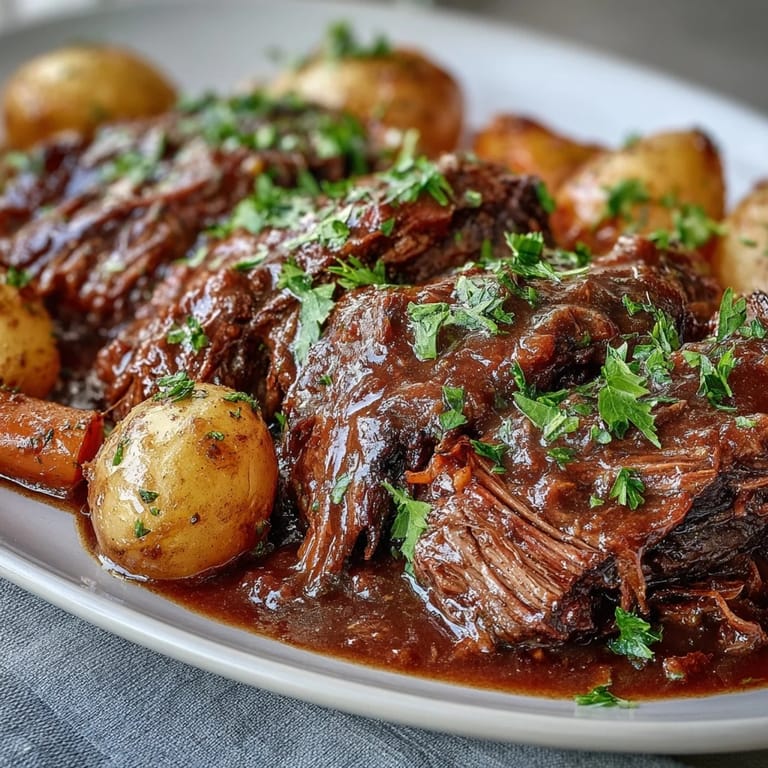
Save My tiny apartment kitchen smelled like a bistro the day I first attempted pot roast, the kind of smell that makes neighbors knock and ask what's happening in there. I'd spent weeks researching techniques, convinced this was the dish that would finally make me feel like a real cook. Three hours later, pulling that fork-tender beef from the oven, I understood why grandmothers guard their recipes like state secrets. The gravy alone was worth the effort.
Last February, during that brutal cold snap that had everyone stuck inside, I made this for three friends who'd been working ridiculous hospital shifts. They showed up exhausted and left three hours later talking about life like they hadn't spoken in months. Something about slow-cooked food makes conversation happen naturally—maybe it's the waiting, the way the house fills with that impossible comfort smell.
Ingredients
- 3-3.5 lb beef chuck roast: Chuck or blade roast has perfect marbling for long braising, becoming meltingly tender while staying intact enough to slice beautifully
- Kosher salt and black pepper: Generous seasoning before searing builds flavor layers that no amount of后期 salting can replicate
- 2 tbsp all-purpose flour: Creates that gorgeous crust during searing and helps thicken the natural braising liquid into velvety gravy
- 3 tbsp olive oil plus 1 tbsp butter: The butter burns less with oil's help, and together they create those precious browned bits that become flavor gold
- 1 large yellow onion in thick wedges: Thick cuts hold their shape during hours of cooking, becoming sweet and meltingly soft without disappearing completely
- 4 cloves garlic, smashed: Smashed garlic releases more flavor than minced and won't turn bitter during the long cook time
- 4 medium carrots in 2-inch chunks: Chunky carrots survive braising better than thin coins, developing that almost candy-like sweetness that makes pot roast legendary
- 3 ribs celery, cut large: Celery adds essential aromatic depth that nobody notices directly but everyone misses when it's absent
- 1.5 lb baby potatoes: Small potatoes cook evenly and don't require peeling, plus they absorb flavor while maintaining their satisfying texture
- 2 tbsp tomato paste: The secret ingredient that adds deep umami richness and creates that restaurant-quality mahogany gravy color
- 1 cup dry red wine: Any drinkable red works—the alcohol cooks off completely but leaves behind complex fruity notes that balance the beef's richness
- 2.5 cups low-sodium beef broth: Low-sodium broth gives you total control over final seasoning, preventing that over-salty disappointment that ruins a perfectly good braise
- 1 tsp Worcestershire sauce: Just enough to create that mysterious depth that makes people ask what's in this sauce anyway
- Fresh rosemary, thyme, and bay leaves: This classic herb combination smells like grandmother's kitchen and adds bright herbal notes that cut through all that rich beef
Tired of Takeout? 🥡
Get 10 meals you can make faster than delivery arrives. Seriously.
One email. No spam. Unsubscribe anytime.
Instructions
- Get everything ready:
- Preheat your oven to 300°F and pat the beef completely dry with paper towels—wet meat will steam instead of develop that gorgeous crust we're after
- Season and prepare the beef:
- Sprinkle the roast generously with salt and pepper on all sides, then lightly coat with flour, shaking off any excess so it doesn't burn in the pot
- Create the perfect sear:
- Heat 2 tablespoons oil and the butter in your Dutch oven over medium-high heat until it shimmers, then sear the roast for 4-5 minutes per side until it's deeply browned with those precious dark crusty bits
- Build the flavor foundation:
- Reduce heat to medium, add remaining oil if needed, then cook the onion wedges for 3-4 minutes until they're golden and softened, followed by garlic for just 30-60 seconds until fragrant
- Develop the base:
- Stir in the tomato paste and let it cook for 1-2 minutes until it darkens slightly and smells almost sweet—this step is absolutely crucial for deep flavor
- Deglaze and build the braising liquid:
- Pour in the red wine while scraping up every single browned bit from the bottom, let it simmer for 2-3 minutes to reduce slightly, then add broth, Worcestershire, and all those herbs
- Start the slow transformation:
- Nestle the beef back into the liquid until it comes halfway up the meat, bring to a gentle simmer, then cover tightly and either reduce heat to low or transfer to the 300°F oven for 1.5 hours
- Add the vegetables:
- Carefully turn the roast over and add the carrots, celery, and potatoes around the sides, submerging them in the liquid, then re-cover and cook for another 1.5-2 hours until beef pulls apart easily
- Create that perfect gravy:
- Transfer the beef and vegetables to a platter and tent with foil while you skim excess fat from the liquid, then simmer and stir in the cornstarch mixture for 2-3 minutes until it coats a spoon beautifully
- Finish and serve:
- Discard the herb stems and bay leaves, shred or slice the beef against the grain, return everything to the pot with that gorgeous gravy, and serve hot with crusty bread for soaking up every drop
 Save
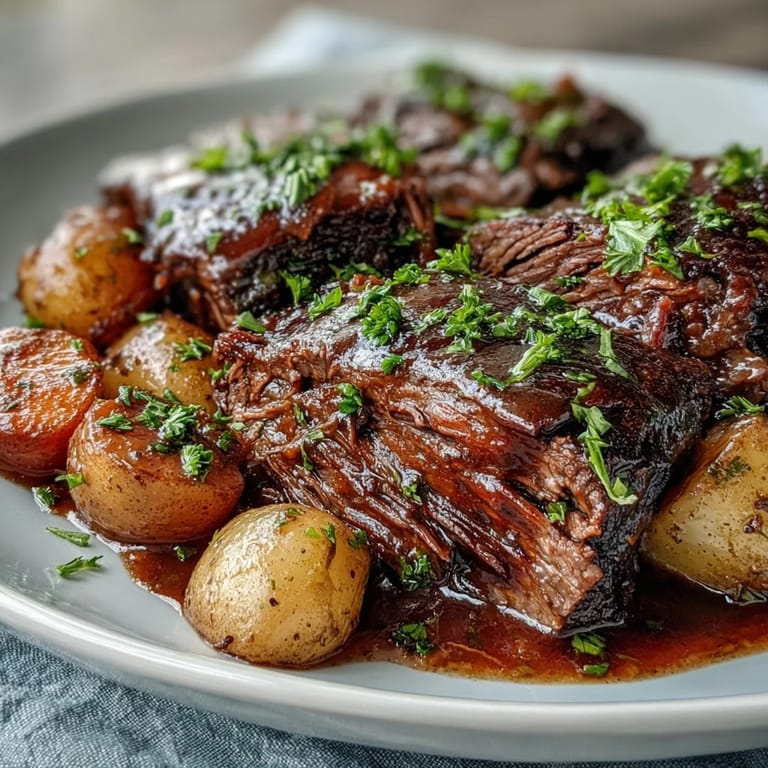
Save There's something almost meditative about the three hours this roast needs, the way your house fills with that incredible smell while you're free to do anything but hover over the stove. My sister made this for her boyfriend's parents last month, and his mother asked for the recipe before she'd even finished her first bite. That's the thing about pot roast—it's unpretentious comfort food that somehow feels special enough for any occasion.
The Gravy Secret
That pot reduction step with the wine before adding broth? That's what separates good pot roast from unforgettable pot roast. I skipped it once during a rushed Sunday dinner and missed that concentrated depth that makes people's eyes light up. Now I never rush that step, even when I'm tired.
Vegetable Timing Matters
Adding the vegetables halfway through keeps them from turning into mush while still absorbing all that beefy flavor. I learned this the hard way after one attempt where everything dissolved into an unrecognizable stew. Now those carrots and potatoes hold their shape while tasting like they've been cooking alongside the beef for three hours anyway.
Making It Your Own
This recipe adapts beautifully to what you have on hand or personal preferences. Sometimes I swap parsnips for some of the carrots, or add pearl onions for that classic French bistro feel. My cousin uses Guinness instead of red wine whenever she makes it for St. Patrick's Day, and honestly, it's become a new family tradition.
- The leftovers make incredible sandwiches the next day, especially on toasted sourdough with extra gravy
- If you don't drink alcohol, extra beef broth with a splash of balsamic creates similar depth
- Patience is your most important ingredient here, so plan this for a day when you can let it cook undisturbed
 Save
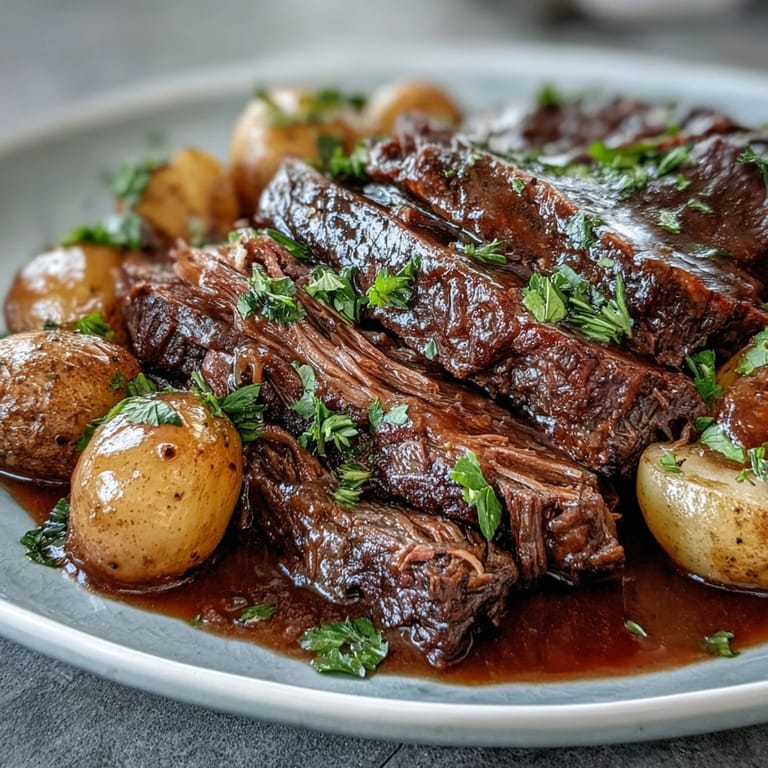
Save Pot roast is one of those rare recipes that rewards patience with something infinitely greater than the sum of its parts. There's pure joy in lifting that lid after three hours and seeing how time and heat transformed simple ingredients into something extraordinary.
Recipe Q&A
- → What cut of beef works best for pot roast?
Chuck roast or blade roast are ideal choices because they contain plenty of marbling and connective tissue that breaks down during slow cooking, resulting in incredibly tender meat. Look for a well-marbled piece weighing 3–3.5 pounds.
- → Can I make this in a slow cooker?
Absolutely. After searing the beef and sautéing the aromatics on the stovetop, transfer everything to your slow cooker. Cook on low for 8–10 hours or high for 5–6 hours, adding the vegetables halfway through cooking to prevent them from becoming too soft.
- → What can I substitute for red wine?
Additional beef broth makes an excellent non-alcoholic substitute. You can also use grape juice mixed with a tablespoon of vinegar for acidity, or simply increase the beef broth quantity to 3½ cups total.
- → How do I know when the pot roast is done?
The beef is ready when it's fork-tender and easily pulls apart into large chunks. This typically takes 3–4 hours of total cooking time. The vegetables should be soft but still hold their shape when pierced with a fork.
- → Can I freeze leftover pot roast?
Yes, pot roast freezes beautifully for up to 3 months. Store the beef, vegetables, and gravy together in an airtight container. Thaw overnight in the refrigerator and reheat gently on the stovetop, adding a splash of broth if needed.
- → Why is my gravy not thickening?
If your sauce is too thin, let it simmer uncovered on the stovetop after removing the beef and vegetables to reduce and concentrate. The cornstarch slurry mixture also helps create a rich, thickened gravy that clings perfectly to the meat and vegetables.