 Save
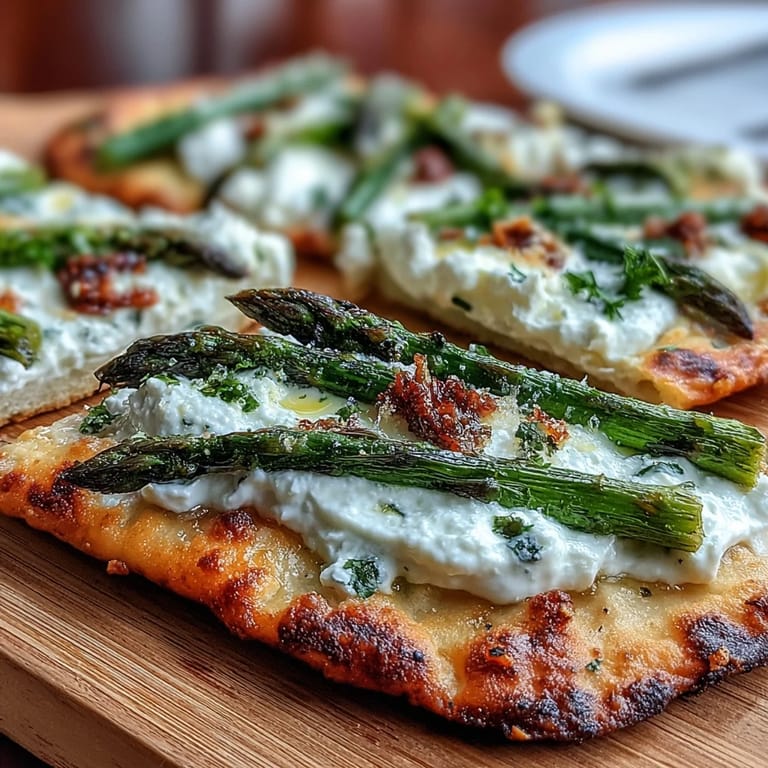
Save There is something about the sound of asparagus snapping that always puts me in a productive, sunny mood. While flipping through ingredients one late April afternoon, the idea for this Roasted Asparagus Flatbread with Burrata and Lemon came together on a whim, inspired by a fridge full of green stalks and a longing for something both light and indulgent. The first batch was meant as a snack, but the aroma of roasting asparagus drew my partner into the kitchen, curiosity piqued. Before I could even plate it, half a flatbread vanished with stolen bites. That’s when I realized I would be making it again—and often.
I served these flatbreads last spring at a backyard get-together, and everyone gravitated to the kitchen as soon as they smelled asparagus beginning to caramelize in the oven. It sparked an impromptu debate about whether burrata or mozzarella reigned supreme, with every guest taking a different side—though every plate was empty by the end.
Ingredients
- Store-bought flatbreads or naan: They crisp just right in the oven and save valuable prep time—try warming directly on the oven rack for extra crunch.
- Olive oil: Use a peppery, bold olive oil to bring out the roasted notes in the asparagus and keep the flatbread from drying out.
- Fresh asparagus: Snapping or trimming the woody ends ensures every bite is tender and not stringy—don’t skip the prep.
- Sea salt and cracked black pepper: Season the asparagus generously; the salt heightens its natural sweetness and pepper gives gentle heat.
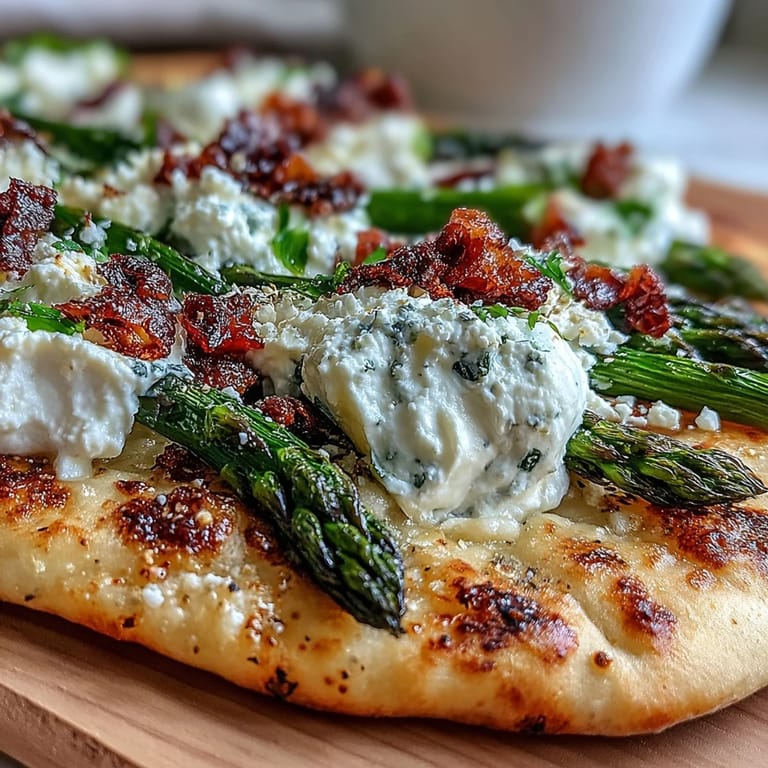
- Burrata cheese: Creamy, rich, and decadently soft—pull it apart carefully to nestle dollops across the flatbread so every piece gets a bit.
- Lemon zest and juice: Zest lifts the dish while a little juice added at the end brings zing—zest before juicing for best results.
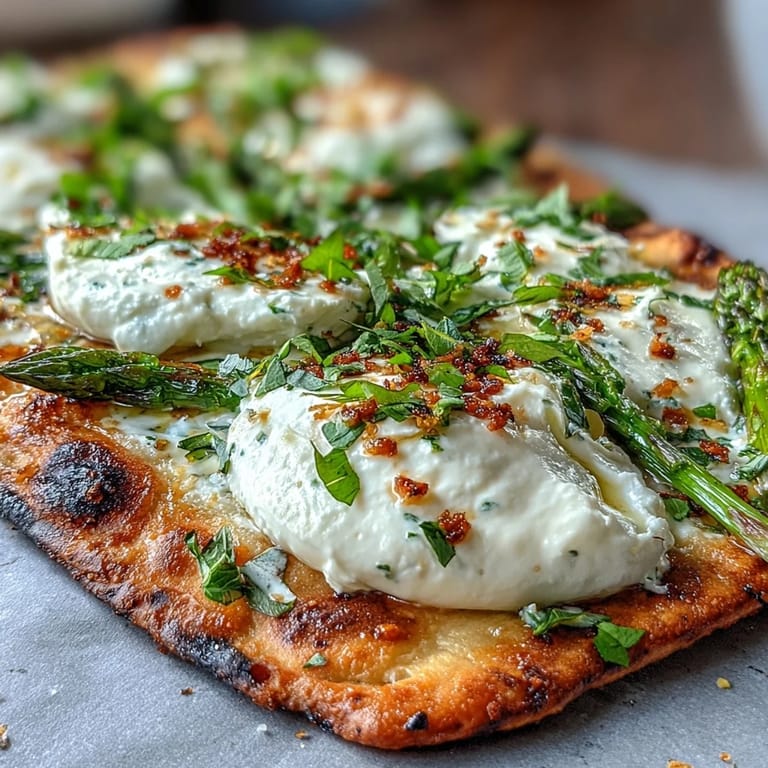
- Fresh basil: Torn basil, rather than chopped, keeps its flavor fresh and oil bright—add right before serving.
- Chili flakes (optional): Just a pinch can add surprise warmth but is totally up to your mood or your guests’ spice limits.
Tired of Takeout? 🥡
Get 10 meals you can make faster than delivery arrives. Seriously.
One email. No spam. Unsubscribe anytime.
Instructions
- Heat things up:
- Preheat your oven to 220°C (425°F). Line a baking sheet with parchment paper to prevent sticking and speed cleanup.
- Roast the asparagus:
- Toss the trimmed asparagus with olive oil, salt, and pepper—listen for that soft sizzle as the oil coats the stalks—then spread in a single layer on the baking sheet and roast for 10–12 minutes until just tender and golden at the tips.
- Crisp the base:
- While the asparagus roasts, brush both flatbreads lightly with olive oil and slide them onto a separate tray or directly onto the oven rack; bake for 4–6 minutes, watching for the edges to turn golden brown.
- Burrata time:
- Gently press the burrata onto each warm flatbread, letting the cheese spread naturally without covering every inch—it will melt and ooze on its own.
- Layer the flavors:
- Evenly arrange roasted asparagus over the burrata, then drizzle the flatbreads with bright, tart lemon juice and sprinkle them with fragrant zest.
- The finishing touch:
- Scatter torn basil leaves and a pinch of chili flakes over the top, if you like things a little spicy. Slice up the flatbread and serve while still warm and melty.
 Save
Save  Save
Save One evening, my friend arrived unexpectedly as I was pulling this out of the oven. We stood at the counter, tearing pieces straight from the tray, laughing at basil leaves stuck to our fingertips, both of us realizing sometimes the best dinners are the spontaneous ones.
Asparagus Flatbread Pairings to Try
This dish shines with a crisp glass of Sauvignon Blanc or a breezy dry Rosé—the acidity balances the richness of the cheese and brightens the greens. If you prefer mocktails, a sparkling citrus water with a basil leaf is just as refreshing.
Making It Your Own: Flavor Swaps and Variations
Don't hesitate to scatter prosciutto or ribbons of smoked salmon before serving if you’re not keeping it strictly vegetarian. My sister likes to swap in arugula for basil for extra bite, and roasted cherry tomatoes lend pleasant sweetness when the mood strikes.
What I Learned from Flatbread Fails
Once, forgetting to pat the asparagus dry led to a topping that slipped and slid. Always dry those stalks well post-wash for best results. Don’t rush resting the flatbread after it comes out of the oven—it’s just a minute, but it helps the cheese settle and makes slicing neater.
- Check your oven’s true temperature with an oven thermometer for reliable crispness
- Let the burrata sit at room temperature for 10 minutes for easier spreading
- Use a large, sharp knife or pizza cutter for the cleanest slices
 Save
Save 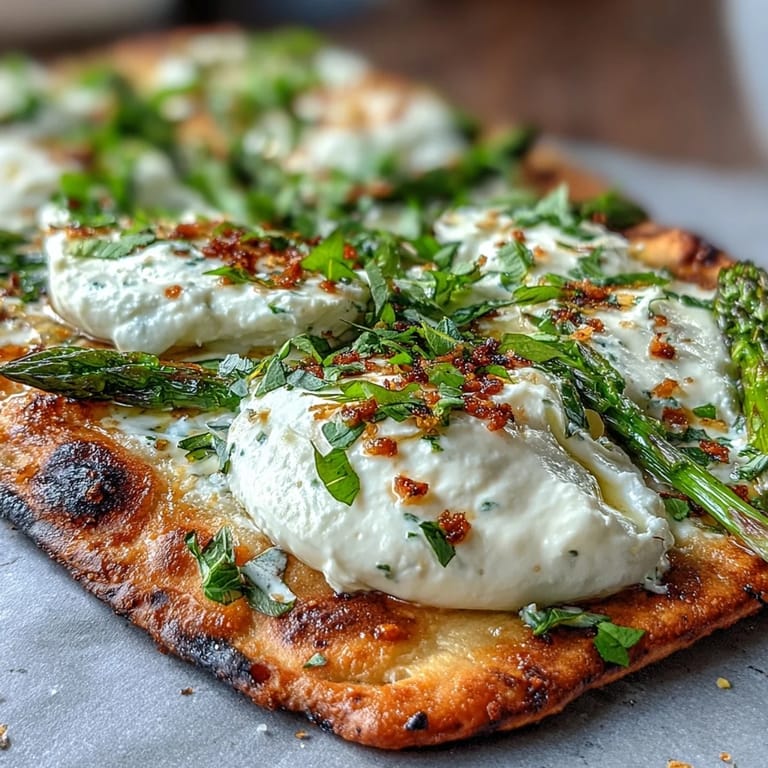 Save
Save I hope this vibrant flatbread invites a little spring sunshine into your kitchen as it did in mine. If you catch yourself sneaking a bite straight from the tray, know you’re in good company.
Recipe Q&A
- → How do I prevent burrata from spreading too much?
Gently press small pieces of burrata onto the warm flatbread instead of smearing; the heat will soften it without causing total melt. Leave some exposed flatbread for texture contrast.
- → What’s the best way to roast asparagus for this dish?
Toss trimmed asparagus with olive oil, salt and cracked pepper and spread in a single layer on parchment. Roast at 220°C/425°F for 10–12 minutes until slightly charred but still tender.
- → How can I make the flatbread extra crisp?
Brush flatbreads with a little olive oil and bake directly on the oven rack or a hot tray for 4–6 minutes until edges brown. A preheated baking stone or steel helps achieve a crisp bottom.
- → Can I prepare components ahead of time?
Roast the asparagus ahead and store refrigerated for up to 2 days; warm briefly before assembling so the burrata softens properly. Keep flatbreads separate to preserve crispness.
- → Are there good substitutions for burrata?
Fresh mozzarella or ricotta salata work well—mozzarella offers a milder, firmer texture while ricotta salata adds a salty crumble. Each changes the creaminess and flavor profile.
- → What wine pairs best with these flavors?
Choose a crisp Sauvignon Blanc or a dry rosé; the acidity cuts through the cheese while complementing lemon and basil notes.