 Save
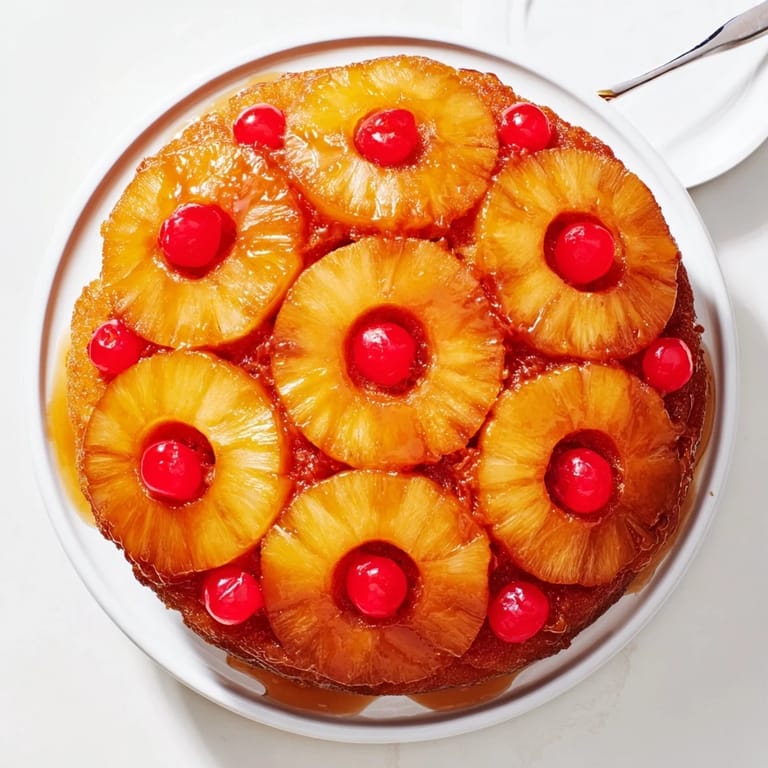
Save The scent of brown sugar bubbling with butter takes me straight back to my grandmother's kitchen, where I'd perch on a stool watching her arrange pineapple rings like edible jewelry. She let me place the maraschino cherries in the centers, and I remember being absolutely certain that this precise arrangement somehow made the cake taste better. Now I understand it was really about the ritual, the anticipation of that dramatic flip onto the serving plate that reveals caramelized fruit clinging to golden cake. There's something almost magical about upside-down cake, the way the ingredients transform during baking into something greater than their parts.
I brought this cake to a summer barbecue last year, and something funny happened. The host had forgotten to serve dessert, so I casually mentioned I had something in the car. When I brought out the still-warm cake and performed the flip right there on the picnic table, everyone stopped talking mid-sentence. The collective gasp when those glossy pineapple rings were revealed made me laugh out loud. Sometimes the simplest recipes, the ones our grandmothers made without measuring, are the ones that stop a room.
Ingredients
- 60 g (1/4 cup) unsalted butter: Melted in the pan to create that essential gooey caramel base
- 150 g (3/4 cup) light brown sugar, packed: The magic ingredient that transforms into butterscotch during baking
- 8–10 canned pineapple rings, drained: Fresh pineapple works too but canned gives consistent moisture
- 8–10 maraschino cherries: Tucked into pineapple centers for that classic jewel-like appearance
- 120 g (1/2 cup) unsalted butter, softened: Room temperature butter creams properly for a tender crumb
- 200 g (1 cup) granulated sugar: Sweetens the cake while the brown sugar handles the topping
- 2 large eggs: Bring them to room temperature for better incorporation into the batter
- 1 tsp vanilla extract: Pure vanilla makes a noticeable difference in such a simple cake
- 190 g (1 1/2 cups) all-purpose flour: Spoon and level the flour rather than scooping directly
- 1 1/2 tsp baking powder: Double-check yours is fresh for proper lift
- 1/2 tsp salt: Balances the sweetness and highlights the vanilla
- 120 ml (1/2 cup) whole milk: Whole milk creates the richest texture, though low-fat works in a pinch
Tired of Takeout? 🥡
Get 10 meals you can make faster than delivery arrives. Seriously.
One email. No spam. Unsubscribe anytime.
Instructions
- Prepare your canvas:
- Preheat your oven to 175°C (350°F) and generously grease a 23-cm (9-inch) round cake pan with butter or cooking spray, paying special attention to the sides.
- Build the caramel foundation:
- Melt 60 g butter directly in the prepared pan, either in the oven or on the stove over low heat, then sprinkle the brown sugar evenly across the bottom.
- Arrange the fruit pattern:
- Place pineapple rings in an attractive pattern over the sugar butter mixture, tucking a maraschino cherry into the center of each ring.
- Cream the butter and sugar:
- In a mixing bowl, beat 120 g softened butter and granulated sugar together until the mixture turns pale and fluffy, about 3 minutes with an electric mixer.
- Add eggs and vanilla:
- Beat in the eggs one at a time, fully incorporating each before adding the next, then stir in the vanilla extract until combined.
- Combine dry ingredients:
- In a separate bowl, whisk together the flour, baking powder, and salt until evenly distributed.
- Build the batter:
- Add the flour mixture to the butter mixture in three additions, alternating with the milk and beginning and ending with the flour, mixing just until combined.
- Layer and smooth:
- Carefully spoon the batter over the arranged pineapple rings, then smooth the top with an offset spatula or the back of a spoon.
- Bake to golden perfection:
- Bake for 38–42 minutes until the cake is golden and a toothpick inserted into the center comes out clean or with just a few moist crumbs.
- The dramatic flip:
- Let the cake rest in the pan for exactly 10 minutes, then run a knife around the edges, place a serving plate over the pan, and confidently invert in one smooth motion.
 Save
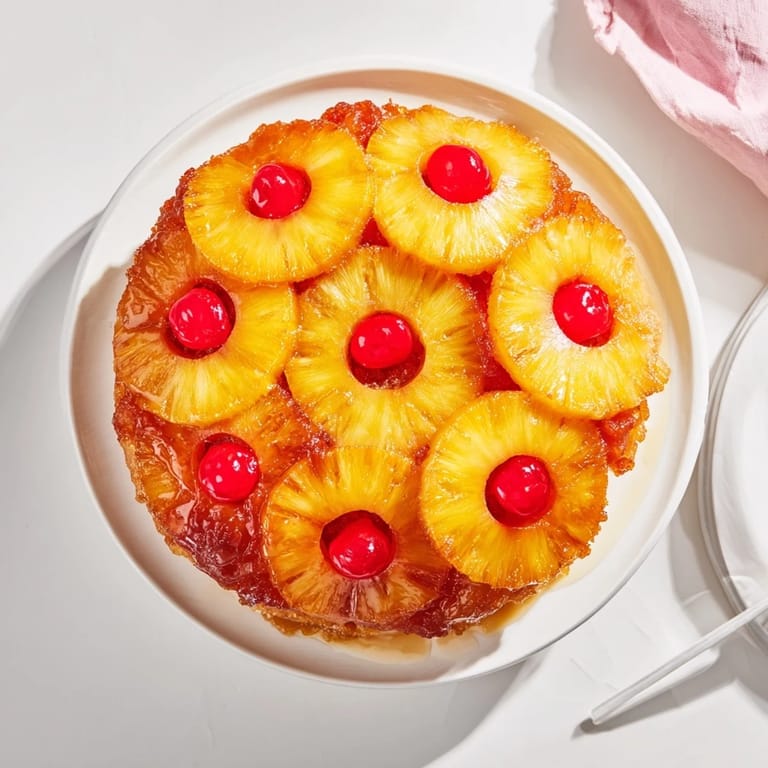
Save My teenage daughter, who usually rolls her eyes at my vintage recipe collection, actually asked me to teach her how to make this. We spent a Sunday afternoon together, her phone forgotten on the counter, arranging fruit and mixing batter. When we flipped the cake and the pineapple emerged perfectly caramelized, she looked at me with genuine surprise that something so simple could be so beautiful. That's the moment this recipe became about more than just dessert.
Making It Your Own
Once you master the classic version, try swapping pecan halves for cherries and adding a splash of dark rum to the caramel layer. I've made this with nectarine slices in summer and pear halves in fall, adjusting the baking time by just a few minutes. The technique remains exactly the same, but the fruit changes the personality completely.
The Serve Warm Rule
This cake has a secret identity as a breakfast cake, especially delicious served warm with a dollop of Greek yogurt. The caramel topping softens slightly when reheated, creating an almost sauce-like consistency. Ten seconds in the microwave brings back that fresh-from-the-oven quality.
Make-Ahead Magic
You can assemble the entire cake up to 24 hours before baking, covering the pan tightly with plastic wrap and refrigerating. Add 3–5 minutes to the baking time if baking cold. The fruit will release some liquid into the brown sugar, creating an even richer caramel.
- Leftovers keep at room temperature for 2 days, covered with a cake dome
- For longer storage, wrap individual slices and freeze up to 1 month
- Reheat frozen slices at 175°C (350°F) for 8–10 minutes
 Save
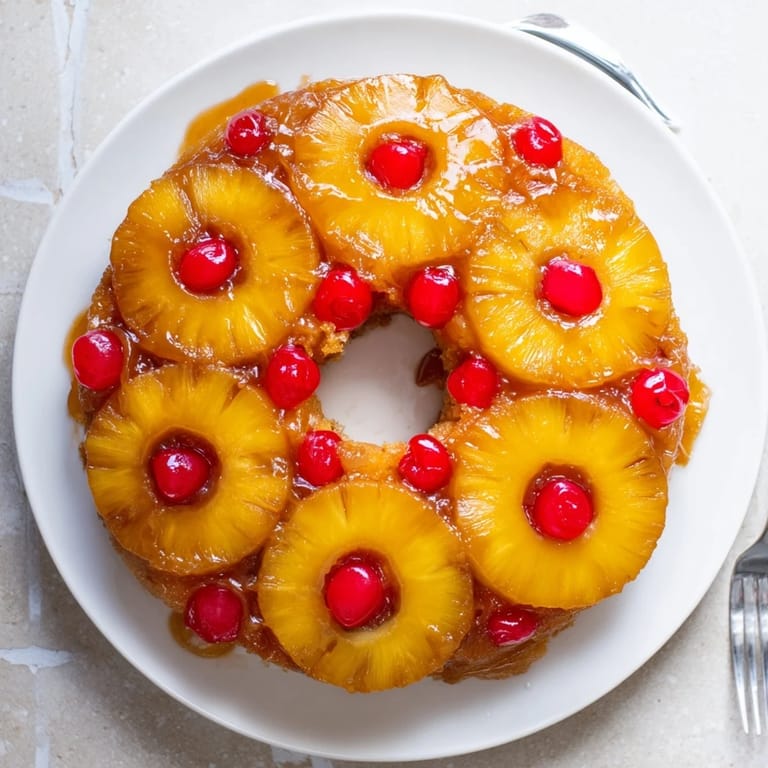
Save There's something deeply satisfying about a dessert that transforms itself in the oven, turning simple ingredients into something that feels like a special occasion. This cake has been making memories for generations, and now it's ready to make some for you.
Recipe Q&A
- → Why is it called upside-down cake?
The cake earns its name because you arrange the fruit in the pan first, pour batter over it, then flip the finished cake upside down to serve. This technique positions the beautiful caramelized pineapple and cherry topping on top.
- → Can I use fresh pineapple instead of canned?
Absolutely. Fresh pineapple works wonderfully and delivers a slightly brighter flavor. Slice fresh pineapple into rings about 1/2 inch thick. You may need to cook it a few minutes longer to achieve proper caramelization since fresh fruit contains more moisture than canned.
- → How do I know when the cake is done?
Insert a toothpick into the center of the cake—if it comes out clean or with just a few moist crumbs, the cake is finished baking. The top should appear golden brown and spring back lightly when touched. This typically takes 38-42 minutes at 175°C (350°F).
- → Should I serve this cake warm or at room temperature?
Both options work beautifully. Warm servings emphasize the gooey caramel topping and soft texture, while room temperature allows the flavors to meld and the cake to slice more cleanly. Many enthusiasts prefer it slightly warm with a scoop of vanilla ice cream.
- → How long does this cake keep?
Store the cake at room temperature under a cake dome or wrapped in plastic for up to 3 days. The moisture from the fruit keeps it tender. For longer storage, refrigerate for up to a week, though bringing it to room temperature before serving restores the best texture.
- → What can I substitute for maraschino cherries?
Pecan halves or walnut pieces make an excellent nutty alternative nestled in pineapple centers. Fresh cranberries, dried cranberries, or even red grapes work for color. Some bakers simply omit the cherries entirely—the pineapple alone creates plenty of visual appeal.