 Save
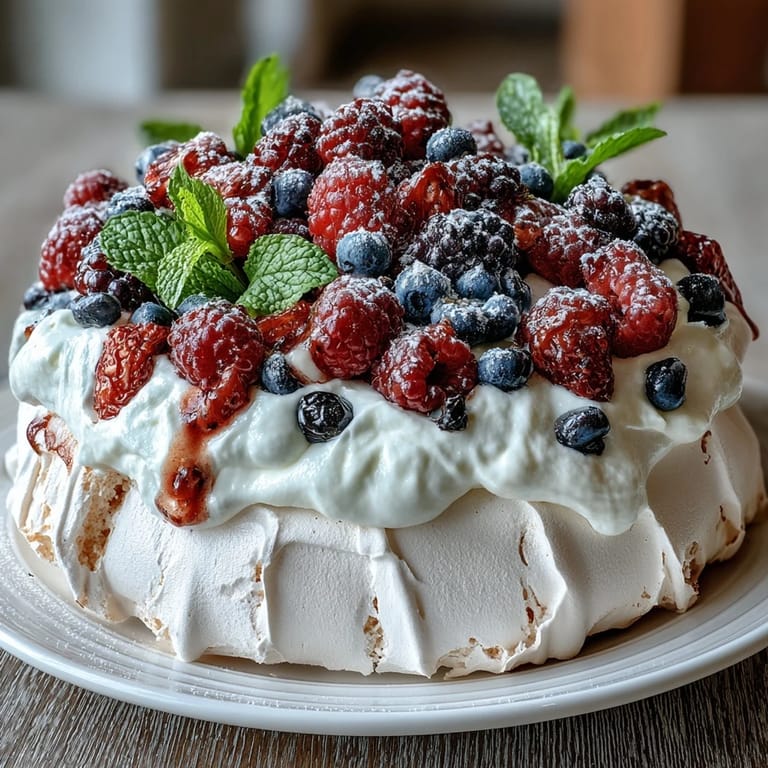
Save My mum mentioned offhandedly that she'd never had a proper pavlova, and something about that confession stuck with me through the week. I found myself researching meringue techniques at midnight, watching videos of Australian bakers coax egg whites into clouds, realizing this dessert was less about ingredients and more about patience and humidity and timing. The first pavlova I made cracked down the middle—a disaster I thought—but when I filled those cracks with cream and berries, it somehow looked more intentional, more beautiful than any perfect dome could have been. Now every time I make one, I think of that imperfect first attempt and how sometimes flaws are just invitations to get creative.
I made this for my mum on Mother's Day morning, and she walked into the kitchen just as I was arranging the berries on top. She didn't say anything at first—just stood there watching me dust powdered sugar over the whole thing. Then she smiled in that way that made me realize I'd accidentally created something she'd remember, not just eat. That's when pavlova stopped being a recipe for me and became a love language.
Ingredients
- Egg whites (4 large, at room temperature): Room temperature is non-negotiable—cold eggs won't whip to those clouds you need, and this is the most common reason pavlovas fail before they even hit the oven.
- Superfine sugar (1 cup/200 g): The fine crystals dissolve faster than regular sugar, which means your meringue stays glossy instead of grainy; if you can't find it, pulse regular sugar in a food processor for 30 seconds.
- Cornstarch (1 tsp): This tiny amount stabilizes the meringue and prevents the dreaded cracks that happen when steam escapes unevenly during baking.
- White vinegar (1 tsp): It sounds counterintuitive, but acid actually helps meringue hold its structure and adds a subtle tang that balances the sweetness beautifully.
- Pure vanilla extract (1 tsp): Use real vanilla, never imitation—the flavor difference shows up in something this delicate.
- Salt (pinch): This awakens the egg whites' ability to foam up and makes every other flavor sing without tasting salty.
- Heavy whipping cream (1 cup/240 ml, chilled): Cold cream whips faster and holds its peaks longer; warm it up even slightly and you'll end up with sweet butter instead.
- Powdered sugar (2 tbsp for cream, plus 1 tbsp for dusting): Powdered sugar dissolves instantly into cream, unlike granulated sugar which leaves a grainy texture.
- Mixed berries (4 cups total): Choose berries that are ripe but still firm enough to not weep all over your cream; wet berries will turn the whole thing soggy within an hour of assembly.
- Fresh mint (1 tbsp, optional): A small handful of mint adds a garden-fresh note and makes the whole dessert feel summery and intentional.
Tired of Takeout? 🥡
Get 10 meals you can make faster than delivery arrives. Seriously.
One email. No spam. Unsubscribe anytime.
Instructions
- Get your mise en place ready:
- Separate your eggs the day before if you can—the whites have time to warm to room temperature naturally, which matters more than you'd expect. Line your baking sheet with parchment paper and trace a 9-inch circle as your guide; this takes 30 seconds and prevents spreading chaos in the oven.
- Whip those egg whites into clouds:
- Start beating on medium speed with a pinch of salt until soft peaks form (they'll look like ocean foam that falls back into itself). This usually takes 3–4 minutes, and patience here pays off because rushing means your meringue won't be stable enough to hold its shape.
- Sugar in, one tablespoon at a time:
- This is the step everyone wants to skip, but adding superfine sugar slowly is what transforms loose foam into glossy, stiff peaks that look almost like satin. Add one tablespoon, beat for about 15–20 seconds until it disappears, then add another; the whole process takes 5–6 minutes and your arm might feel tired, but that's how you know it's working.
- Fold in the secret ingredients:
- Once you have stiff peaks, gently fold in the cornstarch, vinegar, and vanilla with a spatula using big, slow strokes—you're trying to keep those bubbles intact, not deflate them. Folding takes about 1 minute and your meringue should still be glossy and billowing when you're done.
- Shape your nest:
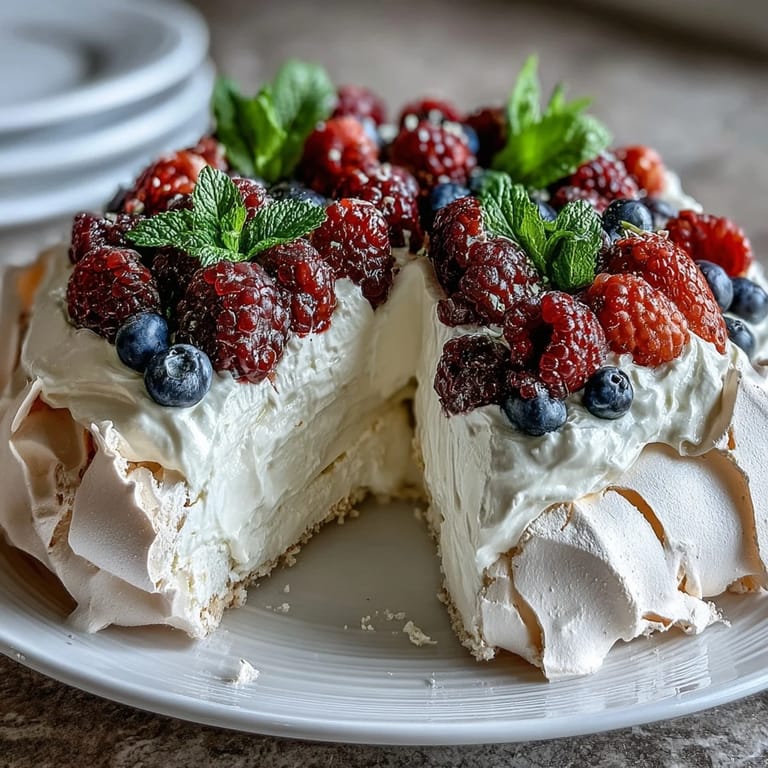
- Spoon the meringue onto the parchment paper inside your traced circle, then use the back of a spoon to create a slight depression in the center and raise the edges up a bit. This nest shape is functional—the depression holds the cream and berries, and the raised edges prevent everything from sliding off the plate.
- Let the oven do the work:
- Bake at 250°F for 1 hour 15 minutes; the meringue should be pale cream-colored and crispy on the outside, but it won't look fully set and that's exactly right. When the timer goes off, turn off the oven and crack the door open just an inch, then let the pavlova sit inside for at least 2 hours as it cools slowly—rapid temperature changes cause cracks, and this slow cool is your insurance policy.
- Make your cream while you wait:
- Whip the cold heavy cream with powdered sugar and vanilla until soft peaks form; this takes about 2–3 minutes and you want to stop just before it gets thick and buttery. Overwhipped cream separates into grainy bits and liquid, so watch it carefully and stop the moment you see soft peaks that hold their shape for a few seconds.
- Assemble your masterpiece:
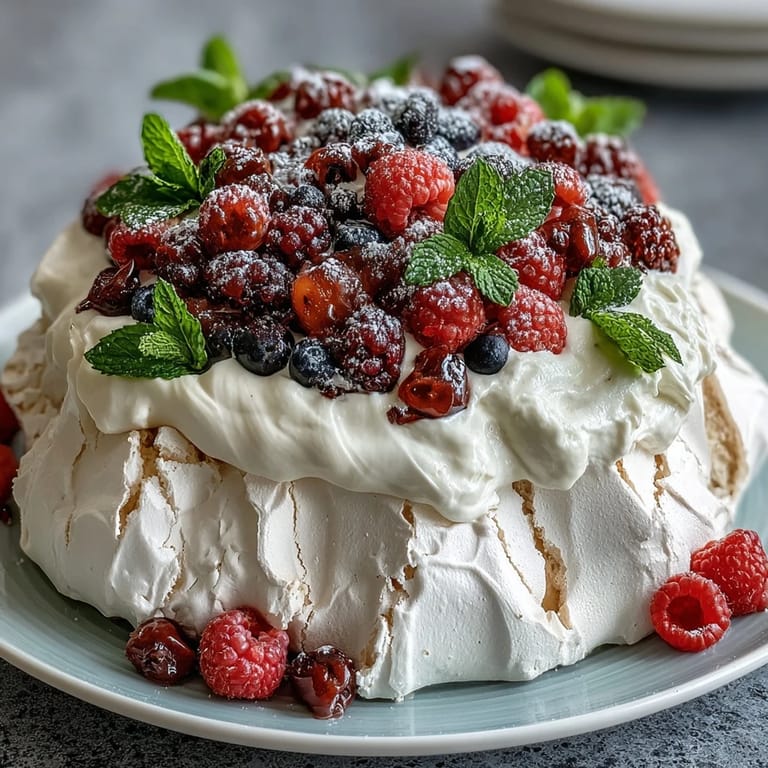
- Transfer the cooled pavlova to your serving platter (it's fragile but more stable than you'd think if you slide a thin spatula underneath), then spoon or dollop the whipped cream onto the depression. Arrange your mixed berries on top in whatever way makes you happy—there's no wrong way—then dust with powdered sugar just before serving if you like.
 Save
Save What gets me about pavlova is that it's technically simple—just eggs, sugar, and timing—but it requires the kind of attention that makes you feel present in your kitchen. My mum keeps the serving platter in her cupboard year-round now, waiting for the next occasion.
Why Humidity Matters More Than You Think
The first time I ignored the weather and made pavlova on a humid afternoon, it came out of the oven looking perfect but tasted slightly sticky inside, like meringue candy instead of that crispy-marshmallow contrast. I learned then that meringue is basically dehydrated egg whites, so any moisture in the air works against you—the drier your kitchen, the better your results. Check the weather forecast before committing to making this; if rain is coming or your city is experiencing unusual humidity, pick another day.
The Berry Selection Strategy
Berries are the star of the show here, so choosing them with intention makes a difference. Strawberries add structure and sweetness, raspberries bring tartness and delicate texture, blueberries stay firm and don't weep, and blackberries add depth and slight chew. Buy them the morning of serving if possible, and if any look mushy or smell fermented, replace them—one bad berry can taint the whole batch.
Timing Your Assembly
The magic window for eating pavlova is within 30 minutes of assembly, when the meringue is still crispy and the cream hasn't started to soak in. If you're serving a crowd, you can prepare the meringue and whipped cream ahead of time (store them separately in airtight containers in the fridge), but add the berries and assemble everything right before people sit down to eat.
- Make your meringue the morning of serving or even the day before—it keeps in an airtight container for up to 2 days.
- Whipped cream stays fresh for 4–6 hours if kept cold, so prepare it an hour or two before you're ready to serve.
- Fresh berries should be rinsed and hulled just before assembly so they don't have time to release their juices onto your cream.
 Save
Save Pavlova is the kind of dessert that looks like you spent hours in the kitchen, even though you mostly just waited for the oven to do its thing. It's honest cooking that celebrates simplicity, and that's probably why it never fails to impress.
Recipe Q&A
- → How do I achieve a crispy pavlova crust with a soft center?
Beat egg whites until stiff peaks form, add sugar gradually, then fold in cornstarch and vinegar. Bake at low temperature and cool in the oven with the door ajar to allow the center to remain soft.
- → Can I substitute the mixed berries with other fruits?
Yes, seasonal fruits like kiwi, peaches, or passionfruit can be used to customize the topping while maintaining freshness and color.
- → What is the best way to whip the cream for the topping?
Chill the heavy cream thoroughly before whipping with powdered sugar and vanilla until soft peaks form to ensure a light and fluffy texture.
- → How does humidity affect the meringue texture?
High humidity can cause the meringue to become sticky or soft rather than crisp. It's best to prepare pavlova on dry days for optimal results.
- → Is there a way to add a chocolate flavor to the pavlova?
Yes, you can fold sifted cocoa powder into the meringue mixture before baking to create a subtle chocolate variation.