 Save
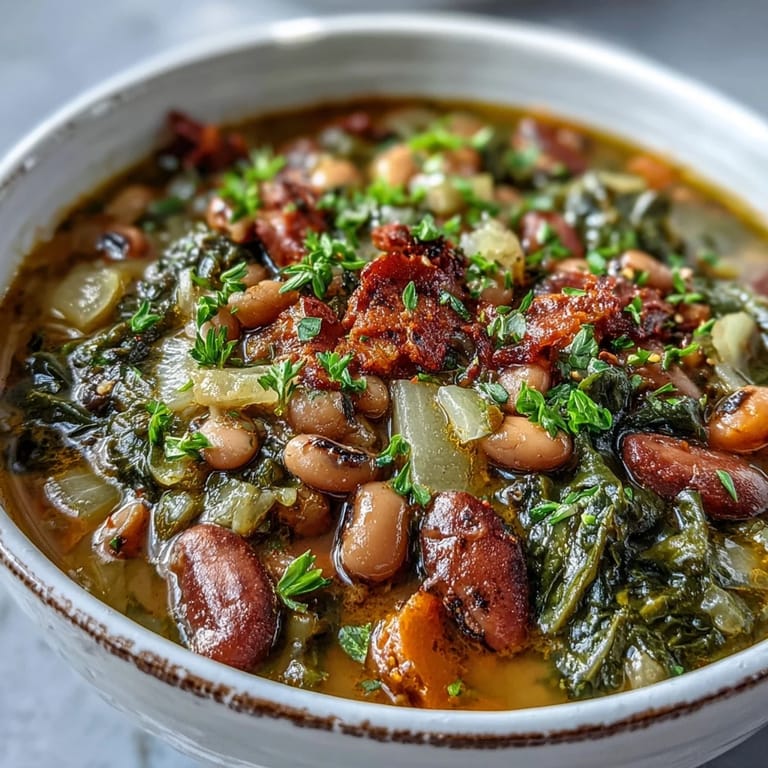
Save My grandmother used to say that black-eyed peas and collard greens were the two vegetables that made sense together, like they were meant to find each other in the same pot. The first time I made this stew on my own, I was standing in my kitchen on a gray January afternoon, and the smell of smoked paprika mixing with sautéed onions transported me straight back to her kitchen. I realized then that this wasn't just a recipe—it was a conversation across time, her hands guiding mine even though she wasn't there. Now when I make it, I'm not just cooking; I'm remembering.
I made this for my friend Marcus on a Saturday when he was going through a rough patch, and he showed up at my door looking defeated. We sat at the kitchen counter while the stew bubbled away, and by the time he tasted it, something in his expression shifted—like the comfort of good food had quietly reminded him that things could get better. He came back three weeks later asking if I'd teach him how to make it, and now he makes it for his own family. That's when I knew this recipe was about more than just feeding people.
Ingredients
- Olive oil (2 tablespoons): Use a good quality oil that you actually like the taste of, because it's foundational to how everything else will taste.
- Yellow onion (1 large, diced): This is your flavor base, so don't rush it—let it get soft and slightly golden before moving on.
- Garlic (3 cloves, minced): Add it after the onions have softened, or it can burn and turn bitter on you.
- Carrots and celery (2 large and 2 stalks): These create a classic aromatic foundation that your palate will recognize even if you can't quite name what you're tasting.
- Jalapeño (1, optional): Seed it first if you want heat without unpredictability, or leave the seeds in if you're feeling brave.
- Collard greens (1 bunch, about 10 oz): Remove every bit of the tough stem—your teeth will thank you later—and chop the leaves into pieces that feel right in your hand.
- Diced tomatoes with juices (1 can, 14.5 oz): Don't drain these; the juices are where the acidity lives, and it brightens everything.
- Black-eyed peas (3 cups cooked or 2 cans, drained): If using canned, give them a thorough rinse under cold water to remove excess sodium and the starchy liquid.
- Vegetable broth (4 cups, low-sodium): Low-sodium matters here because you're controlling the salt yourself and don't want a surprise at the end.
- Water (1 cup): This dilutes the broth just enough so the stew isn't one-dimensional but stays flavorful.
- Smoked paprika (1 teaspoon): This is the ingredient that makes people ask what you did differently—it's your secret.
- Dried thyme (1 teaspoon): Fresh thyme is lovely if you have it, but dried works beautifully here and won't disappear into the stew.
- Cayenne pepper (1/2 teaspoon, optional): Add it to the spice mixture early so the heat distributes evenly, not just in one bite.
- Salt and black pepper: Taste as you go and adjust at the end—this is non-negotiable.
- Bay leaves (2): These should come out before serving, so fish around and make sure you get both.
- Apple cider vinegar (1 tablespoon): Add this right before serving; it's the brightness that makes people realize why this stew tastes alive.
Tired of Takeout? 🥡
Get 10 meals you can make faster than delivery arrives. Seriously.
One email. No spam. Unsubscribe anytime.
Instructions
- Build your flavor base:
- Heat the olive oil over medium heat and add the onion, carrots, celery, and jalapeño. Let them soften for 6 to 8 minutes, stirring occasionally, until the onions turn translucent and the kitchen starts to smell like dinner is actually happening. You're looking for that moment where everything looks a little golden at the edges.
- Wake up the garlic:
- Add the minced garlic and cook for just 1 minute—you want it fragrant but not brown. This short window is important because garlic can go from perfect to burnt in seconds.
- Toast your spices:
- Stir in the smoked paprika, thyme, cayenne pepper, salt, and black pepper, cooking for another minute. This toasting step is what makes these spices bloom and actually taste like something instead of just dusty particles.
- Wilt the greens:
- Add the chopped collard greens and stir them around for 3 to 4 minutes until they soften and release their moisture. They'll seem like a lot at first, but they collapse down faster than you'd expect.
- Bring everything together:
- Pour in the diced tomatoes with their juices, the black-eyed peas, vegetable broth, water, and bay leaves. Stir until everything is combined and you can see the colors mixing—the green and cream and rust all becoming one.
- Let time do the work:
- Bring the stew to a simmer, then reduce the heat to low, cover, and cook for 45 to 50 minutes, stirring every so often. The longer it sits, the more the flavors get to know each other and marry together into something bigger than their individual parts.
- Finish with brightness:
- Remove the bay leaves and stir in the apple cider vinegar. Taste and adjust the salt and pepper—this is your moment to make it exactly how you want it.
- Serve with purpose:
- Ladle it into bowls while it's hot, and if you have cornbread nearby, the combination becomes something worth talking about.
 Save
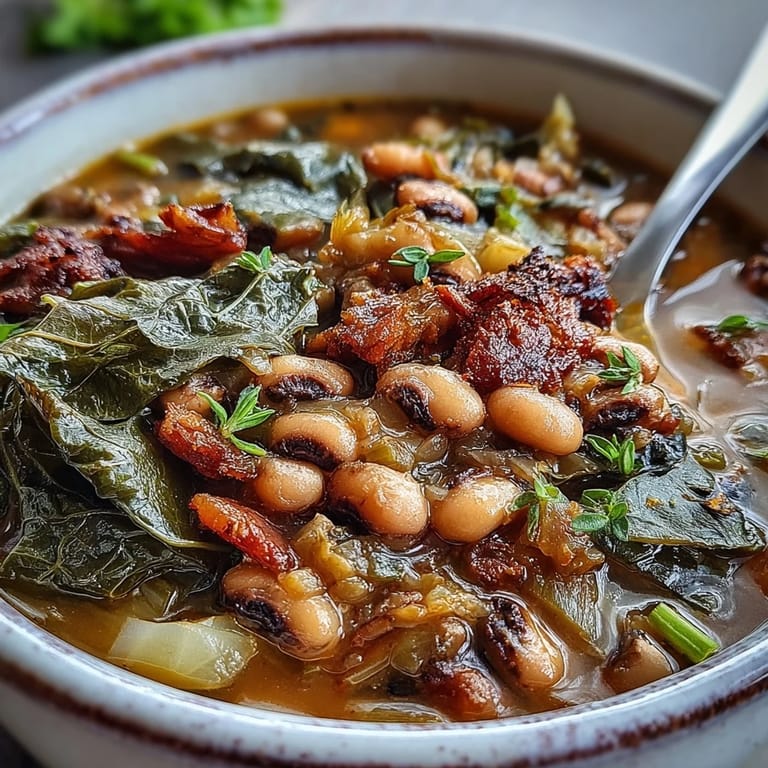
Save There's a moment that happens about 40 minutes into cooking when you lift the lid and the steam rises up, and suddenly your whole face is wrapped in warmth and the smell of something that tastes like home. My daughter walked in during one of those moments and said, "This smells like Sunday," which is the highest compliment a kitchen can receive. That's when a recipe stops being ingredients and instructions and becomes a memory you're actively making.
Making It Your Own
The beauty of this stew is that it welcomes improvisation without losing itself. I've made versions with smoked turkey added in, and versions where I stirred in a teaspoon of liquid smoke for extra depth. Some nights I'll add a splash of hot sauce at the table, other times a squeeze of fresh lemon. The core stays sturdy enough to support whatever you want to add, which is the mark of a truly good recipe.
The Timing Question
People often ask if this can be made ahead, and the answer is yes, but here's what I've learned: it's actually better the next day. The flavors settle overnight and become more coherent, less like separate ingredients and more like a unified thing. If you're serving it the same day you make it, don't panic—it'll still be wonderful. Just know that if you have time, letting it rest in the refrigerator works magic.
Serving and Storage Wisdom
This stew keeps beautifully for up to five days in the refrigerator and freezes even better—I've pulled quarts out of the freezer months later and been grateful to past me. The texture might be slightly softer after freezing, but the flavor is still there, still warm, still comforting. Reheat it slowly on the stovetop rather than the microwave, which will give you time to remember why you loved it in the first place.
- Pair it with cornbread, rice, or even a crusty bread that can soak up the broth.
- Leftover stew makes an excellent filling for a simple grain bowl the next day at lunch.
- If it thickens too much during storage, just add a splash of broth or water when you reheat it.
 Save
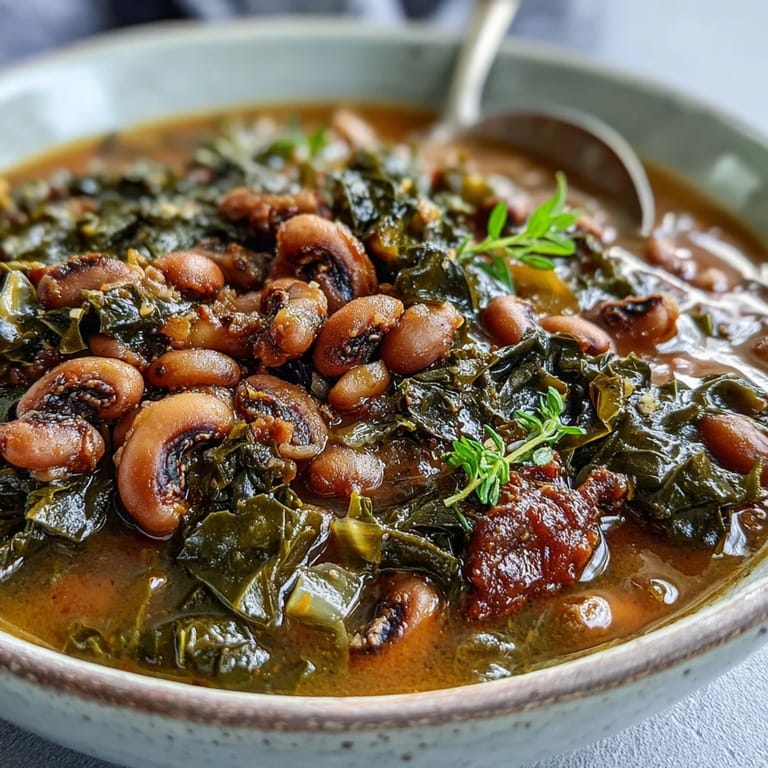
Save This stew has become the kind of recipe I make when things feel uncertain, because it's proof that simple ingredients can become something that feeds more than just hunger. Every time someone asks for the recipe, I feel a little like I'm passing something along.
Recipe Q&A
- → Can I make this stew vegan?
Yes, simply omit any smoked meats or liquid smoke for a fully plant-based version.
- → What can I substitute for collard greens?
Kale or Swiss chard work well as alternatives, offering similar texture and nutrition.
- → How do I increase the heat level?
Add more jalapeño or cayenne pepper to taste during the cooking process.
- → Can I prepare the black-eyed peas in advance?
Yes, cooking dried black-eyed peas beforehand reduces total simmering time and allows flavors to develop more evenly.
- → What sides pair well with this dish?
Traditional cornbread, steamed rice, or crusty bread complement the stew's hearty flavors.
- → How to store leftovers?
Keep leftovers in an airtight container refrigerated for up to 4 days; flavors improve after resting.